
Your Chimp Brain Is Lying to You About Time (And Your Limiting Beliefs Are the Real Problem)
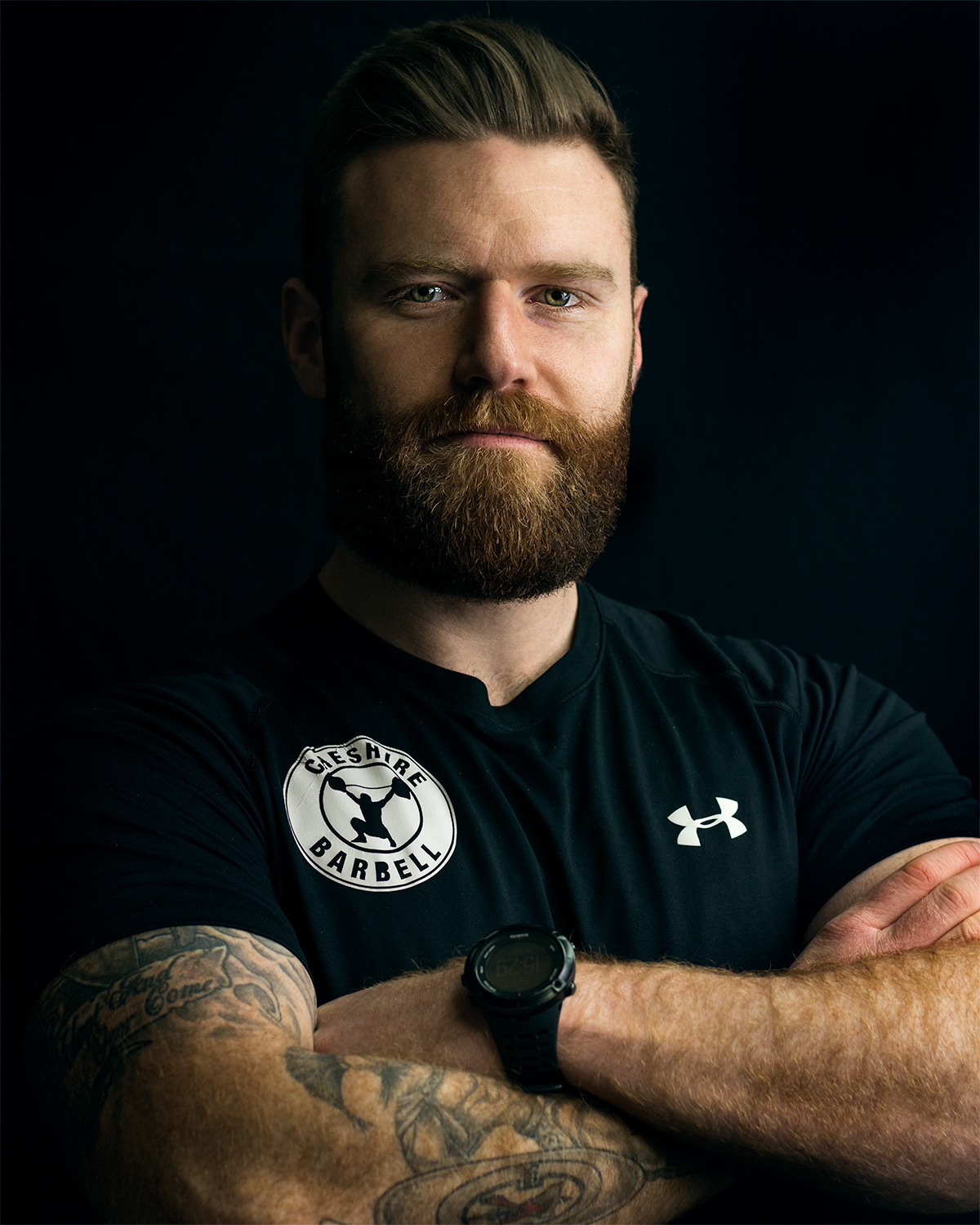

In the last 14 years, I’ve sat across from countless men—executives, business owners, team leaders, professional athletes, all of whom were also fathers—and heard the same excuse repeated like a broken record:
"I don't have time."
Here's what I've learned: they're not lying. They genuinely believe it.
But they're also wrong.
The majority of these men aren't actually busy. They're paralysed. And their procrastination isn't due to a lack of time—it's due to deeper limiting beliefs that have calcified into their identity.
I bet you can resonate with at least two of these:
Lack of Confidence in your ability to succeed or keep up
Fear of Failure that makes starting feel impossible
Fear of Judgment from others watching you try
Unfamiliarity with where to even begin
Dislike of Being a Beginner when you're used to being competent
All-or-Nothing Thinking that paralyzes you when conditions aren't perfect
Overcommitment that leaves you spread too thin
Avoidance of Discomfort masquerading as "not having time"
Unclear Priorities that create mental fog
Perceived Lack of Support from those around you
Stress and Fatigue that deplete your capacity
Perfectionism that demands ideal conditions before you start
Guilt About Prioritizing Yourself over family and work
Sound familiar?
Here's the uncomfortable truth: Your chimp brain isn't trying to sabotage you. It's trying to keep you safe.
Your emotional brain—what I call your "chimp"—evolved to protect you from threat and discomfort. It doesn't like effort. It doesn't like uncertainty. It doesn't like the possibility of failure or judgment. So it manufactures excuses. It tells you that you're "too busy," that conditions aren't right, that you'll start next Monday.
And because these excuses feel true, you believe them.
But here's what separates the men who transform from those who stay stuck: they stop blaming time and start addressing the beliefs.
By the end of this letter, you'll understand what's really holding you back. More importantly, you'll have a clear path to reprogram the beliefs that have been running your life on autopilot.
Why Successful Men Feel Paralysed (Even Though They Have Everything)
You're successful at work.
Maybe you manage complex projects. You lead teams. You make decisions. You're disciplined, strategic, and results-oriented. Your colleagues respect you. Your career or business is growing.
And yet.
You can't stick to a morning routine.
You can't maintain a consistent training schedule.
You can't prioritise your health despite knowing exactly what needs to happen.
You can't be present with your family without your mind drifting to work.
This isn't a time problem. This is an identity problem.
Here's what most people get wrong:
They assume the issue is external. Not enough hours in the day. Too much work. Too many responsibilities. Family demands. Unexpected obstacles.
So they try to optimise their way out of it. They buy planners. They download apps. They attend time management seminars. They wake up earlier. They cut sleep. They try to squeeze more productivity out of an already depleted system.
And nothing changes.
Why? Because they're treating a belief problem like a logistics problem.
The real issue is this: Your chimp brain has learned that staying in your comfort zone keeps you safe. And your comfort zone—the familiar patterns of work, distraction, avoidance, and procrastination—feels safer than the unknown territory of change.
Consider the project manager who can manage a company's budget but can't stick to a meal plan. On the surface, it makes no sense. But psychologically, it makes perfect sense. At work, he has a framework. He has authority. He has predictability. He knows the rules and how to win.
With his health? It's unfamiliar. It requires vulnerability. It requires admitting he's not already good at it. It requires the possibility of failure in front of people who matter to him.
His chimp brain says: "Stay in the zone where you're already winning. Avoid the zone where you might lose."
So he stays stuck.
I worked with a client who hadn't trained consistently in eight years. He'd start programmes enthusiastically on Monday, abandon them by Wednesday, and then spend the rest of the week feeling guilty and ashamed.
When we dug into it, the limiting belief wasn't "I don't have time." It was: "If I can't do it perfectly, it's not worth doing at all."
This belief had served him well in his career. Perfectionism had driven his success. But in his personal life, it was a prison.
Once he understood this—once he saw the belief for what it was (a protective mechanism, not a truth)—everything shifted. He started training 20 minutes instead of waiting for 90-minute blocks. He ate well 80% of the time instead of waiting for perfect conditions. He showed up imperfectly, consistently.
Within 12 weeks, he'd lost 16 pounds, his energy had doubled, and his wife commented on his presence for the first time in years.
The change wasn't about time management. It was about belief management.
Here's the aha moment: Your limiting beliefs aren't character flaws. They're not permanent. They're not even true. They're just narratives your chimp brain created to keep you safe. And narratives can be rewritten.
The better way forward isn't to work harder or optimise more. It's to understand which beliefs are running your life, recognise them for what they are (protective mechanisms, not truths), and deliberately reprogram them.
This is the foundation. Everything else—the training, the nutrition, the routines, the presence with your family—flows from this.
The 13 Limiting Beliefs Holding You Back (And How to Re-programme Them)
In 14 years, I've identified 13 core limiting beliefs that show up repeatedly in high-achieving men. Each one feels true. Each one is a lie.
Here's what's important to understand: These beliefs aren't character flaws. They're protective mechanisms your chimp brain created to keep you safe. The good news? They can be reprogrammed.
The bad news? Reprogramming requires you to do the uncomfortable thing—the very thing your chimp brain is designed to avoid.
But here's the thing about discomfort: it's where growth lives.
1. Lack of Confidence: "I Don't Think I Can Keep Up"
The Belief: You doubt your ability to succeed or maintain consistency. You've tried before and failed. The evidence feels overwhelming.
Why It Sticks: Your chimp brain uses past failures as proof that you can't do this. It's trying to protect you from future disappointment.
The Reprogramming:
Start small. Create early wins.
Not because small wins are the end goal, but because they're proof to your chimp brain that progress is possible. Every minor success builds momentum and reinforces the belief that you can.
The mistake most men make is focusing only on the bigger picture—the 12-week transformation, the 20-pound weight loss, the complete lifestyle overhaul. Your chimp brain looks at that mountain and says: "Too big. Too risky. Stay home."
Instead, zoom in on the day-to-day tasks. View them as a strategy that forms the building blocks carrying you toward the end result.
Example: Instead of "I'm going to train 5 days a week for 12 weeks," it's "I'm going to do 15 minutes of movement today." That's it. One day. One small win.
Do that consistently, and something shifts. You start to experience results. The reward you feel outweighs the effort required to pull your thumb out and follow the process. Confidence builds naturally.
The Result: You move from "I don't think I can" to "I've already proven I can."
2. Fear of Failure: "What If I Try and It Doesn't Work?"
The Belief: Failure is a dead end. If you try and don't succeed, it means something is wrong with you.
Why It Sticks: Your emotional brain perceives failure as weakness. It also doesn't like effort. So it encourages you to fear what's required to learn from mistakes—because that's easier than the effort required to make them and learn from them in the first place.
The Reprogramming:
Redefine what failure means.
Failure isn't a dead end. It's part of the process. Every stumble is a step forward if you're willing to learn from it. You don't learn from your successes quite like you do your mistakes.
Keep a record of lessons learned. Turn setbacks into invaluable experiences.
If you expect mistakes before they occur, you can take comfort in the knowledge that you're growing and developing. Your rational brain knows this. Your chimp brain needs evidence.
Example: A client tried a new training protocol and felt sore for three days. His old narrative: "This doesn't work for me. I'm doing it wrong." His new narrative: "My body is adapting. This is progress."
Same experience. Different belief. Different outcome.
The Result: You move from "I can't fail" to "Failure is feedback."
3. Fear of Judgment: "What Will People Think?"
The Belief: Others are watching and judging. If you try and fail, they'll criticize you. It's safer to stay invisible.
Why It Sticks: We're wired to care about what others think—it kept us safe in tribes. But this protective mechanism now keeps you stuck in your comfort zone.
The Reprogramming:
Here's the truth: Most people are too busy worrying about themselves to notice what you're doing.
Start in a space where you feel comfortable—whether at home or in a small, supportive group. Build the confidence to step into more public spaces over time. This is gradual exposure.
See it as a progressive collection of evidence proving that others won't criticize you for trying. They're more focused on their own insecurities than yours.
We're conditioned to give a shit about what others think because doing so keeps us safe. If you want to grow, you have to put the blinkers on.
That said, there are times when you absolutely should care about others' views:
Holding your own personal standards higher so you remain attractive to your partner
Reflecting on how your children perceive your actions so you can lead from the front
Asking trusted friends for honest feedback to nurture your relationships
These matter. But a lot of our considerations around others' opinions are self-limiting and designed to keep us within our comfort zone. Identify these, and disregard them.
Example: A client was terrified to train at his local gym because he thought people would judge his form. He trained at home for two weeks. Then he went to the gym once. No one cared. He went again. Still no one cared. Now he's a regular, and he's realized that everyone at the gym is too focused on their own workout to judge his.
The Result: You move from "They're watching" to "They don't care."
4. Unfamiliarity: "I Don't Know Where to Start"
The Belief: The path forward is unclear. There are too many options. You don't know the right way to do this.
Why It Sticks: Uncertainty triggers your chimp brain's threat response. When you don't know what to do, it's easier to do nothing.
The Reprogramming:
Break things into manageable steps. Remove the overwhelm.
Having a clear framework eliminates excuses and makes the unfamiliar feel less daunting. Remember: familiarity takes time, repetition, and lots of exposure. Set your expectations wisely.
An experienced athlete is less overwhelmed by 50,000 spectators after 10 years of competition compared to their first televised event. The difference? Exposure.
Remind yourself of the value that comes from gradual and consistent exposure. 10 minutes per day, every day, will get you there faster than 70 minutes per week.
Example: Instead of "I need to overhaul my entire life," it's "I'm going to follow this specific morning routine for 30 days." The framework removes the need to figure it out.
The Result: You move from "I don't know where to start" to "I have a clear path."
5. Dislike of Being a Beginner: "I Should Already Be Good at This"
The Belief: Being a beginner is embarrassing. You should be able to figure this out quickly. Not being immediately good at something is a reflection of your capability.
Why It Sticks: You're used to being competent. Being a beginner feels like a step backward.
The Reprogramming:
Growth only happens when you embrace the discomfort of starting from scratch.
Shift your focus to effort rather than immediate results. This makes the process far more rewarding.
In today's society, we're conditioned to focus on work, work, work. From age five, we're asked "What do you want to be when you're older?" From high school, we're encouraged to make decisions that shape our professional trajectory. As a result, society conditions us toward growing old with little other than our occupational skillset.
If you want to grow, you better get used to being a beginner and being shit at something. Otherwise, you'll grow to know nothing other than your occupation.
I have tremendous respect for older men who can play musical instruments, black belt martial artists, or those who spend their spare time producing works of art. I know men who draw incredible cartoons in their time away from work. I know men who are unbelievable with an acoustic guitar. I also train with BJJ black belts who've put 20 years of time, effort, and headspace into their development outside of their work or responsibilities as fathers.
That's growth. That's a life well-lived.
Example: A client was embarrassed to start training because he was "out of shape." I asked him: "Would you rather be out of shape and stay that way, or be out of shape and improve?" The answer was obvious. He started. Within weeks, he realized that everyone at the gym was focused on their own journey, not judging his.
The Result: You move from "I should already know this" to "I'm willing to learn."
6. All-or-Nothing Thinking: "If I Can't Do It Perfectly, It's Not Worth Doing"
The Belief: If you can't dedicate long, uninterrupted blocks of time, it's not worth starting. If conditions aren't ideal, you'll wait for a better time.
Why It Sticks: Perfectionism feels like high standards. It feels like discipline. But it's actually a form of procrastination.
The Reprogramming:
Consistency beats perfection every time.
Done is better than perfect. The habit of action—even if it's imperfect—builds momentum far faster than waiting for the "perfect" conditions.
Even five minutes of effort can make a difference when done consistently.
I made this mistake myself for years. Given my experience in human performance, I would write my own strategies for physical and psychological development. But my knowledge became as much a barrier as it was a gift. I would only do what I thought was perfect, meaning I would very rarely do anything consistently. If I wasn't able to do something the way I had planned, I wouldn't do it at all.
Progress was unlikely.
It wasn't until I recognized that 50% of something is better than 100% of nothing that I started to meet my own expectations and achieve my goals.
Example: A client wanted to train but only had 20 minutes instead of his planned 60-minute session. His old narrative: "Not worth it. I'll do it tomorrow." His new narrative: "20 minutes is better than zero. I'm doing it." He trained. He felt better. He built momentum.
The Result: You move from "It has to be perfect" to "Done is better than perfect."
7. Overcommitment: "I'm Spread Too Thin"
The Belief: You have too many obligations. There's no time for personal priorities. You're doing your best just to keep your head above water.
Why It Sticks: Overcommitment feels like responsibility. It feels like you're doing everything right. But it's actually a form of self-sabotage.
The Reprogramming:
Step back and assess where your time is actually going.
Sometimes it's not about finding more hours. It's about choosing what truly matters and cutting the rest. You can often achieve much more once you're realistic about how you spread your time.
Productivity, for me, isn't about becoming more efficient so I can do more. It's about becoming more efficient so I can improve the quality of my output—which often involves scaling back the amount I do so I can also focus on rest, decompression, relaxation, and recovery.
Ultimately, doing less within a specific time period, but consistently over a long period of time, often yields a much greater outcome.
I love this metaphor: If you read 20 pages every day, you will read as many as 20 books in a year.
Think about that for a second. Most people love the idea of achieving things in the blink of an eye. It never happens. If you set realistic expectations and focus on consistency, you're more likely to achieve extraordinary things.
Example: A client was juggling work (65 hours/week), family, fitness, and personal development. He felt like he was failing at all of them. We cut his commitments by 30%. Suddenly, he was excelling at the ones that mattered most.
The Result: You move from "I'm spread too thin" to "I'm focused on what matters."
8. Avoidance of Discomfort: "This Is Too Hard"
The Belief: Discomfort is something to avoid. If something feels difficult, it's a sign you shouldn't do it.
Why It Sticks: Your chimp brain is designed to avoid discomfort. It's trying to keep you safe.
The Reprogramming:
Discomfort isn't something to shy away from. It's something to lean into. Discomfort is where growth lives.
The fight, flight, or freeze mechanism is built into every one of us to help us act in a way that keeps us safe. This safe zone—your comfort zone—is the void. If we remain within it, we'll never learn, grow, and develop.
I remember being invited to train Brazilian Jiu Jitsu at the gym I now train regularly. I was invited by a truly inspiring character—a black belt, Superintendent, and Area Commander of a local Constabulary. Training with other members of the Police, most of whom are firearms officers, at the tactical training centre.
To preface this: I'm a self-proclaimed macho alpha male with tonnes of experience working within testosterone-fueled environments over the last 15 years. Yet the thought of stepping "on the mat" for the first time scared the shit out of me. My chimp brain manufactured plenty of excuses I could give to turn down this opportunity.
But I didn't, because I recognized that this moment of discomfort was aligned with an opportunity for me to grow.
Imagine if I'd turned down that opportunity. It's important for you to recognize when you're about to do the same. It's important for you to recognize that discomfort typically occurs when positive change is nigh.
Example: A client was terrified to start training in public. That discomfort was the signal that growth was waiting on the other side.
The Result: You move from "This is too hard" to "This is where I grow."
9. Unclear Priorities: "I Don't Know What Matters Most"
The Belief: You have too many competing priorities. You don't know which one to focus on. Everything feels equally urgent.
Why It Sticks: When you're overwhelmed, you tend to react emotionally, catastrophize, bury your head, hunker down, and avoid change.
The Reprogramming:
Developing clarity is the only cure for overwhelm, anxiety, and stagnation.
Clarity allows you to acknowledge the simple and realistic steps required to move in the right direction rather than remaining stuck in the mindset of seeking comfort over all else.
Get clear by putting pen to paper. Write down your dreams, your ambitions, and your goals. Reverse engineer the process by setting simple and achievable milestones that must be achieved along the way.
But here's the critical part: Just don't forget to action your plan.
Dreaming about your goals isn't achieving your goals. Talking about your goals isn't achieving your goals. Writing about your goals isn't achieving your goals. You still need to take action and put your plan into practice.
Example: A client had five competing priorities and felt paralyzed. We identified his top three. Suddenly, the path forward was clear.
The Result: You move from "Everything matters" to "This is what matters most."
10. Perceived Lack of Support: "No One Understands What I'm Trying to Do"
The Belief: You're alone in this. Your family doesn't support your goals. Your colleagues don't understand. You don't have the backing you need.
Why It Sticks: Feeling unsupported is isolating. It's easier to give up than to push forward alone.
The Reprogramming:
For those who feel unsupported, finding or building a community can make all the difference. Surrounding yourself with people who understand your journey and hold you accountable creates a foundation for success.
That said, I would encourage you to take responsibility over this so-called lack of support. Could your perception of this be down to your lack of communication around your need for it in the first place?
Have you clearly communicated your vision, your dream, your why to those you are requesting such support from? Or are you just expecting them to understand?
Have you produced the evidence that you are actually committed to this? Or are you expecting them to take you seriously despite previously never showing commitment to anything before?
Have you explained what type of support you need? As men, I don't believe we need sympathy, empathy, or care. What I believe we need is someone to recognize that we're not acting, thinking, or feeling like the man we want to be, followed by a little encouragement to go do the thing that helps us prove to ourselves that we are the person we say we want to be.
Example: A client felt unsupported by his wife. When he clearly communicated his vision and showed consistent commitment, her support followed naturally.
The Result: You move from "I'm alone" to "I have my people."
11. Stress and Fatigue: "I'm Too Drained to Start"
The Belief: You're mentally or physically exhausted. Any additional effort feels impossible. You need to recover before you can take on more.
Why It Sticks: Fatigue is real. But it's often a symptom of poor capacity management, not a reason to stay stuck.
The Reprogramming:
You only have so much capacity—physically, mentally, and emotionally. 100% is 100%.
If more of that capacity is being taken up by work, home, finance, or relationship stress, then you're less likely to be in a position to take on more.
Include writing into your day. Put your stresses into perspective. Control the controllables. Catastrophize less by identifying the facts and worrying less about fictitious worries manufactured by your emotional brain.
Importantly, learn to juggle your priorities. Some weeks you may have more of your capacity available to take things head on. Others, you just have to do what you can to maintain and prevent regression.
Sometimes I can train Jiu Jitsu 4x per week. Other times, it's best for me to attend just once to avoid taking steps back whilst opening up some of my capacity to deal with higher work loads or my responsibilities as a Dad.
Example: A client was exhausted from work stress. Instead of adding more to his plate, we focused on recovery. His energy naturally increased.
The Result: You move from "I'm too tired" to "I'm managing my capacity."
12. Perfectionism: "Everything Has to Be Done Perfectly"
The Belief: If you can't do something flawlessly, it's not worth doing. Conditions have to be ideal. Everything has to be dialed in.
Why It Sticks: Perfectionism feels like high standards. It feels like excellence. But it's actually a form of self-sabotage that keeps you from starting.
The Reprogramming:
Done is better than perfect. The habit of action—even if it's imperfect—builds momentum far faster than waiting for the "perfect" conditions.
Does perfect even exist?
Is it not something that we create in our own minds as another justification as to why we need not apply ourselves?
Example: A client wanted to start a training program but waited for the "perfect" time. That time never came. When he started imperfectly, everything changed.
The Result: You move from "It has to be perfect" to "Progress over perfection."
13. Guilt About Prioritising Yourself: "I'm Being Selfish"
The Belief: Taking time for yourself is selfish. You should prioritize your family and work above all else. Self-care is indulgent.
Why It Sticks: You've been conditioned to believe that sacrifice equals love. That putting yourself last is noble.
The Reprogramming:
Here's the truth: When you take care of yourself, you're able to show up better for others. It's not selfish—it's necessary.
Setting boundaries and communicating your needs to loved ones creates space for you to thrive without guilt.
It's another cliche, isn't it? For good reason—we all face it.
Do I want my boys to grow up knowing how to take care of themselves? Do I want my boys to grow up and understand how to juggle their priorities and manage their time? Do I want my boys to learn new things, develop new skills, and become as great as they care to dream?
Obviously, the answer to these questions is yes.
Therefore, is it not my responsibility to lead from the front and show them how?
We must view the choices we make as our opportunity to design the blueprint for our children. Once you realize this, it becomes clear how ridiculous, irrational, and selfish self-care guilt actually is.
Example: A client felt guilty training 30 minutes daily. Then he realized his kids were watching him prioritise his health. Now they ask to join him.
The Result: You move from "I'm being selfish" to "I'm leading by example."
The Path Forward
By tackling these 13 limiting beliefs one by one, you can shift the narrative that you "don't have time" and start reclaiming control over your schedule, your goals, and ultimately, your life.
You get to become the person you admire.
You get to go to sleep at night having looked at yourself in the mirror, confident in the fact that you're living your life in a way you were always meant to.
The question isn't whether you have time.
The question is: Are you willing to reprogram the beliefs that have been running your life on autopilot?


Comments